

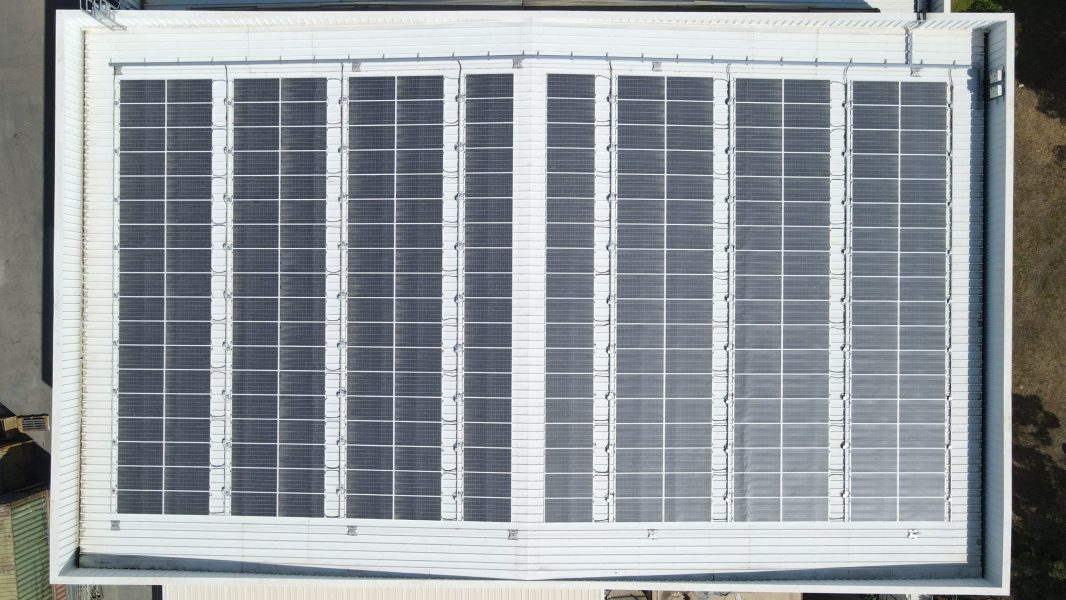
Not every roof is built to support the weight of traditional solar panels. Old buildings, lightweight commercial roofs, and many industrial structures often fail structural assessments required for conventional solar installations. In these cases, the challenge isn’t access to sunlight; it’s the roof’s load capacity.
This is where flexible solar provides a smarter, safer alternative. Designed specifically for weight-restricted roofs, flexible solar technology allows buildings to generate clean energy without structural reinforcement, roof penetration, or excessive risk.
Below are four key reasons why flexible solar is the right choice for roofs that can’t support traditional solar panels.
The most critical advantage of flexible solar is its lightweight construction. Traditional solar panels are built with glass, aluminum frames, and heavy mounting racks, often adding significant dead load to the roof.
A flexible panel, on the other hand, is made of fully flexible solar cells and lightweight composite materials. This differentiates it from semi-flexible panels, which still rely on rigid substrates. Flexible panels are thin, lightweight, and add only a fraction of the weight of conventional systems, often reducing roof load by up to 90%.
Because of this, flexible solar is ideal for:
Another major reason flexible solar is the smarter option is its installation method. Traditional solar systems require racks, ballast, and roof penetrations.
Flexible panels are typically bonded directly to the roof surface using industrial-grade adhesives, eliminating the need for heavy mounting structures. This non-penetrative approach:
For flat commercial roofs and weight-sensitive structures, this installation method significantly lowers structural and maintenance concerns.
Despite being thin and lightweight, flexible solar panels are often more impact-resistant than traditional glass panels. Because they do not contain glass or rigid frames, they are less prone to cracking when exposed to:
The flexibility of these solar panels allows it to absorb stress rather than fracture, making flexible solar especially suitable for industrial environments and harsh weather conditions.
Flexible solar systems place less mechanical and thermal stress on the roof over their lifetime. Traditional panels mounted on racks can create concentrated load points and increased wind uplift forces. In contrast, flexible panels sit close to the roof surface and distribute weight evenly.
This design reduces:
Additionally, the low-profile installation minimizes airflow disruption, helping maintain overall roof stability – an important consideration for lightweight and aging roofs.
Flexible panels are lightweight and bonded directly to the roof surface. Because of this, individual panels can be replaced or upgraded without dismantling heavy racking systems. This flexibility is especially valuable for commercial and industrial buildings where minimizing downtime and roof disturbance is critical. For roofs with limited load capacity, this approach helps future-proof the solar system while preserving roof integrity over time.
If your roof cannot support the weight of traditional solar panels, flexible solar is the smarter option. With ultra-low weight, non-penetrative installation, improved impact resistance, and reduced structural stress, flexible solar enables renewable energy where conventional systems simply can’t. For buildings with low load capacity, flexible solar isn’t just an alternative—it’s the solution.
"*" indicates required fields
How Do Flexible Solar Panels Work?
Flexible solar panels operate using the same photovoltaic principles as traditional panels. Sunlight strikes the flexible solar cells, generating direct current (DC) electricity, which is then converted into usable alternating current (AC) through an inverter. The key difference lies in the technology. Flexible solar panels use Apollo's unique flexible solar cell technology. This allows the panels to deliver reliable energy generation without the weight and rigidity of conventional panels. Rollability and Shapeability: Apollo's solar cells can fit any contour Lightweight Design: Reduces shipping costs and simplifies installation Durability: Engineered to withstand vibrations, impacts, and harsh environmental conditions High Efficiency: Maintains optimal energy production despite flexible design Environmental Resilience: Performs well under various weather conditions, including low sun radiation
How Much Do Flexible Solar Panels Weigh?
Traditional solar panels typically weigh between 15–25 kg (33–55 lbs) per panel, excluding mounting hardware. Flexible solar panels weigh significantly less- 2.9 kg/m², making them suitable even for roofs with strict load limits. This low weight also enables applications such as portable flexible solar panels, temporary installations, and remote energy solutions where structural capacity is limited.
What Causes Flexible Solar Panels to Fail?
Like any solar technology, flexible solar panels can fail under certain conditions. Common causes include improper installation or adhesive failure. Being an Apollo certified installer is a benefit. When installed correctly and sourced from reputable manufacturers, flexible solar systems are reliable and long-lasting.
Build Smarter Energy Today & Discover Flexible Solar Solutions with Us
"*" indicates required fields